

What SHEIN’s $50 billion IPO means for activewear brands
On July 10, 2026, China’s securities regulator approved SHEIN’s long-awaited Hong Kong IPO, clearing the way for a listing that could value the company at $40 billion to $50 billion. The approval concluded a four-year journey that saw SHEIN pivot from New York to London and finally to Hong Kong, its valuation cut by more than half from a $100 billion peak in 2022. The numbers behind the journey tell a story that matters for every activewear brand.
What sank a $100 billion valuation, and what survived it
SHEIN’s financial trajectory is a case study in what the market rewards, and what it rewards more selectively than it did in 2022. Revenue grew from $3 billion in 2019 to $38 billion in 2024. Net profit, after reaching $2 billion in 2023, collapsed 40 percent to $1 billion in 2024. Global web traffic growth slowed from over 60 percent year-on-year to single digits. App downloads fell as much as 30 percent. US sales dropped 13 percent in June alone.
The policy environment added more pressure. The $800 de minimis exemption that shielded SHEIN’s parcels from US customs duties disappeared in May 2025. The European Union followed with a EUR 4.40 per-parcel fee in July 2026 (Straits Times, July 14, 2026; Kavout).
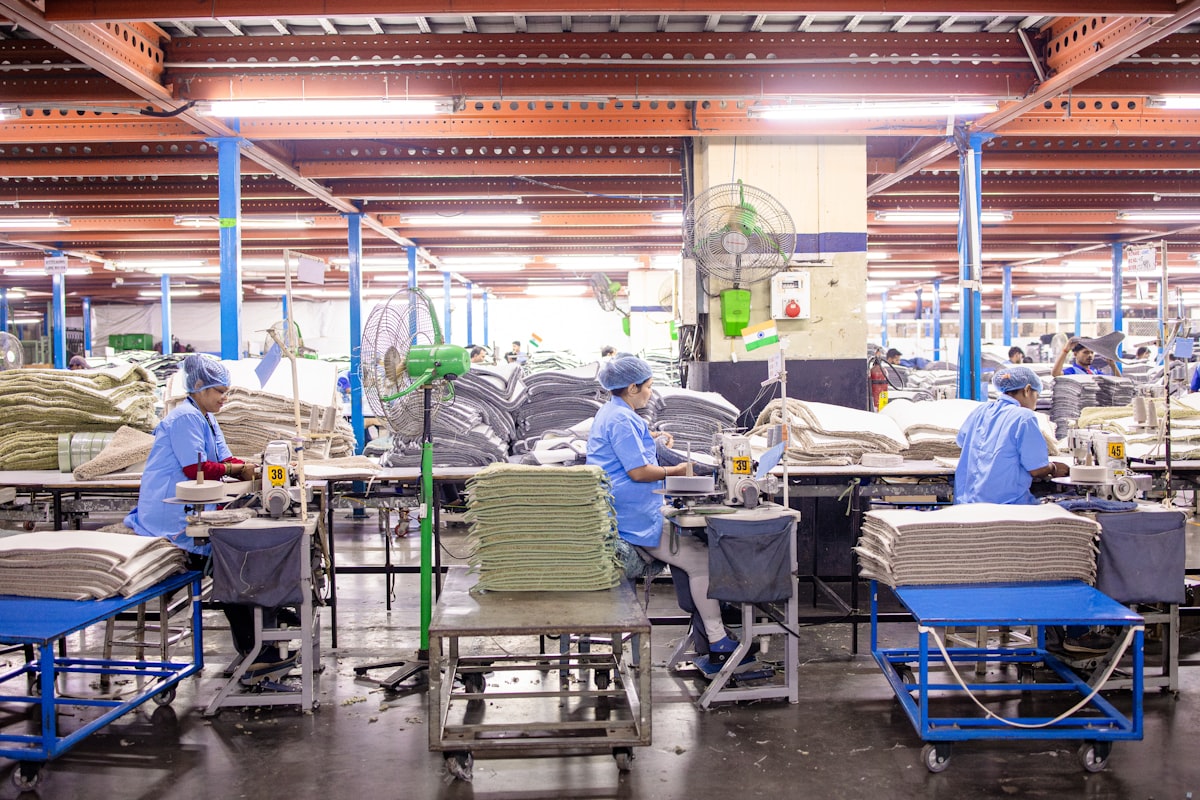
The market’s verdict is clear. It will not pay a premium for revenue growth that costs more to generate than it returns in profit. The valuation compression from $100 billion to $40 to 50 billion reflects a market adjustment, not a punishment. The froth of the 2022 growth-at-all-costs era disappeared, and what remained was a company that proved something structurally durable: a supply chain that can produce quality garments in batches of 100 to 200 pieces, deliver them in five to seven days, and carry almost no inventory.
The regulatory approval itself is the subplot that matters more than the price tag. Under China’s 2023 offshore listing rules, any company with Chinese operations needs CSRC clearance to list abroad. SHEIN spent a year waiting for London approval that never came. The Hong Kong green light, granted on July 10, signals that Beijing now views the “made in China, sold to the world” model as a legitimate export channel, not a regulatory gray zone (EcomCrew, July 16, 2026). For OEM manufacturers feeding that channel, the compliance ambiguity has been resolved.
How 100-piece orders rewrote the economics of fashion
SHEIN did not beat Zara by being cheaper. It beat Zara by building a production model that makes inventory risk optional.
| Metric | Zara | SHEIN | Traditional |
|---|---|---|---|
| Test order MOQ | 500 pieces minimum | 100 to 200 pieces | 5,000 pieces |
| Styles testable with 3,000 pieces | 1 to 6 | Up to 30 | 1 |
| Design to delivery | 14 days | 5 to 7 days | 30 to 45 days |
| New styles per day | ~100 (35,000/year) | 2,000 to 10,000 | N/A |
| Inventory as share of sales | ~30% | Single digits | 30% plus |
Source: JingSourcing, 2026 edition.
These numbers describe three structural advantages layered on top of each other, not one.
The first is the cost of being wrong. A brand that guesses wrong on a silhouette loses 100 pieces with SHEIN’s model and 500 with Zara’s. The difference is not just the cost of fabric. It is the cost of storage, discounting, and the opportunity cost of production capacity that could have made something that sells.
The second is the length of the feedback loop. Zara’s loop, from designer intuition to store shelf to sell-through data, runs 14 to 30 days. SHEIN’s loop, from algorithm-detected trend signal to production order to real-time sales data, runs three to seven days. The algorithm is not smarter than a designer. It is faster at aggregating signals from thousands of data points across competitor pricing, social media trends, and its own platform’s conversion rates.
The third, and the least discussed, is how the model got built in the first place. SHEIN did not wake up one morning with 20,000 factories willing to accept 100-piece orders. At the start, no factory would touch a batch that small. The machine setup cost alone made it unviable. SHEIN solved it by shortening payment terms from the industry-standard 90 days to 30 days or less. Factories that would never have accepted tiny orders for a 90-day receivable decided 30 days made the numbers work (JingSourcing). The real unlock was liquidity, not technology.
Why the Middle East became SHEIN’s proof of portability
The Middle East is the market that validated the model’s most important claim: it works anywhere, without localization cost.
The GCC region has no indigenous textile manufacturing base. Its textile market, valued at $12.4 billion in 2026, is built entirely on imports and retail distribution (MarkWide Research). Every garment sold in Riyadh or Dubai passes through a supply chain that begins outside the region. SHEIN did not need to open a store, build a warehouse, hire a local design team, or adapt its product line. It pointed its app at a market of young, smartphone-native consumers and began shipping parcels from Guangzhou.
The region’s retail structure added to the advantage. Zara and H&M positioned themselves as premium offerings in Middle Eastern retail, their prices inflated by import duties, mall rents, and local agent margins. SHEIN’s direct-to-consumer model bypassed every layer. Local retail groups like Landmark and Majid Al Futtaim own channels but not manufacturing. The region’s e-commerce infrastructure, with smartphone penetration exceeding 90 percent in Saudi Arabia and the UAE, meant consumers were ready for a mobile-first fashion experience before SHEIN arrived.
In June 2026, SHEIN launched its Xcelerator program in the Middle East, extending its on-demand production and fulfillment infrastructure to regional brands. One of the first partners, Dubai-based SUMWON Studios, generates $350 million in annual revenue and is targeting $1 billion with SHEIN’s supply chain backing (Just-Style, June 18, 2026). A $350 million brand that still needs external manufacturing is the data point that defines the region’s structural gap. Middle Eastern fashion brands can design, market, and sell. They cannot make. The factory that fills that gap owns the relationship.
The broader numbers confirm the demand trajectory. The Middle East sportswear market reached $8.15 billion in 2025 and is projected to hit $11.76 billion by 2034. The women’s segment is the fastest-growing cohort at 4.6 percent CAGR, driven by rising female sports participation and the removal of restrictions on women’s athletics in Saudi Arabia. Sport hijabs, modest activewear, and performance swimwear are identified as the highest-growth subcategories (IMARC Group, 2026). The global modest activewear market, valued at $96.8 billion in 2025 with a projected CAGR of 5.3 percent, is anchored in the Middle East, which accounts for 46 percent of global demand (Business Research Insights, July 2026).
What the SHEIN model actually solves for niche brands
SHEIN proved that small-batch, data-responsive manufacturing can dominate a market. But SHEIN built that model for $5 T-shirts and $10 sweaters. A $30 yoga legging operates on a different set of economics. The fabric needs to stretch and recover 500 washes. The seams need flatlock construction that does not chafe during a 90-minute hot yoga session. The brand needs GRS certification documents, not just a low price tag.
This is where the structural difference between Chinese and overseas e-commerce explains why niche DTC activewear brands exist and thrive. In China, Alibaba, JD.com, and Pinduoduo control the consumer entry point, the payment layer, and the logistics infrastructure. A brand selling yoga wear in China opens a Tmall store. It does not build a website. The platform owns the customer relationship.
Vertical e-commerce brands compounded this problem. They could acquire customers, but they could not keep them at a cost lower than the platform charged for the same access. The math broke.
Overseas, the infrastructure is modular. A brand discovers customers on Instagram or TikTok. It builds a store on Shopify. It processes payments through Stripe. It fulfills from a third-party warehouse or directly from the factory. No single platform controls the stack. The brand owns the customer. That structural difference is why a niche activewear brand serving 10,000 repeat customers can be a sustainable business. In China, it would be a Tmall store among 100,000 others.
The cross-border data supports this trajectory. China’s cross-border e-commerce exports exceeded 2 trillion yuan in 2025. Chinese apparel brands from Urban Revivo to Anta to Bosideng are opening flagships in New York, London, and Tokyo. They are not opening stores on Alibaba International. They are building independent DTC operations in overseas markets because that is where the unit economics of brand ownership actually work (Business of Fashion, March 2026; ChinaBiz Insider, June 2026).

How to build an activewear brand on your terms
The lesson SHEIN spent a decade and billions of dollars proving is simple: small-batch manufacturing is not a compromise. It is the correct production philosophy for a market where consumer taste moves faster than production calendars.
You do not need 20,000 factories. You need one partner that operates on the same logic.
At Ziyang, we organize our production across four tiers, each one building on the one before it. You can start at any tier and move up when your brand is ready.
Stock items, zero MOQ. Pull from our existing catalog of over 200 activewear styles. Add your logo, choose your packaging, ship within days. This is not the “budget option.” It is the fastest way to test whether your distribution channel converts. SHEIN proved that speed to market beats depth of inventory. We apply the same principle.
Fabric customization, 100 to 200 pieces per style. You have your own color palette, your own hand-feel preferences, your own fit standards. A hundred pieces is enough to run a controlled test with your audience. The cost of being wrong at this volume is roughly the salary of one sales associate for one month. The cost of being right is the data you need to place a confident larger order. MILE Collective started exactly here. They tested their concept at our low-MOQ tier, validated demand, and scaled to 5,000 units per color. They never had to switch factories. As their founder told us: the low-MOQ tier “allowed us to test the market without bankruptcy risk.”
Full OEM, 600 to 800 pieces per color. This is where the relationship deepens. Custom fabrics from scratch. Pantone-matched colors. Your tech pack, our production line. CSB moved their production from Vietnam to Ziyang two years ago. The concern was whether quality consistency would hold across large volumes. Across 500,000 units, the quality remained, in their words, impeccable. A brand that scales its volume should never have to wonder whether its factory can keep up.
Eco-friendly line, approximately 1,000 pieces per color. GRS-certified recycled polyester. GOTS-certified organic cotton. OEKO-TEX Standard 100 compliance. Biodegradable packaging made from corn starch. When SET ACTIVE launched their Eco-Luxe collection, they did not just put a sustainability label on a legging. They worked with us to source certified materials, match fabric performance to their design requirements, and bring the collection to market. It sold out in three days. Their comment on the process: “Ziyang didn’t just produce our designs. They improved our fabric choices.”
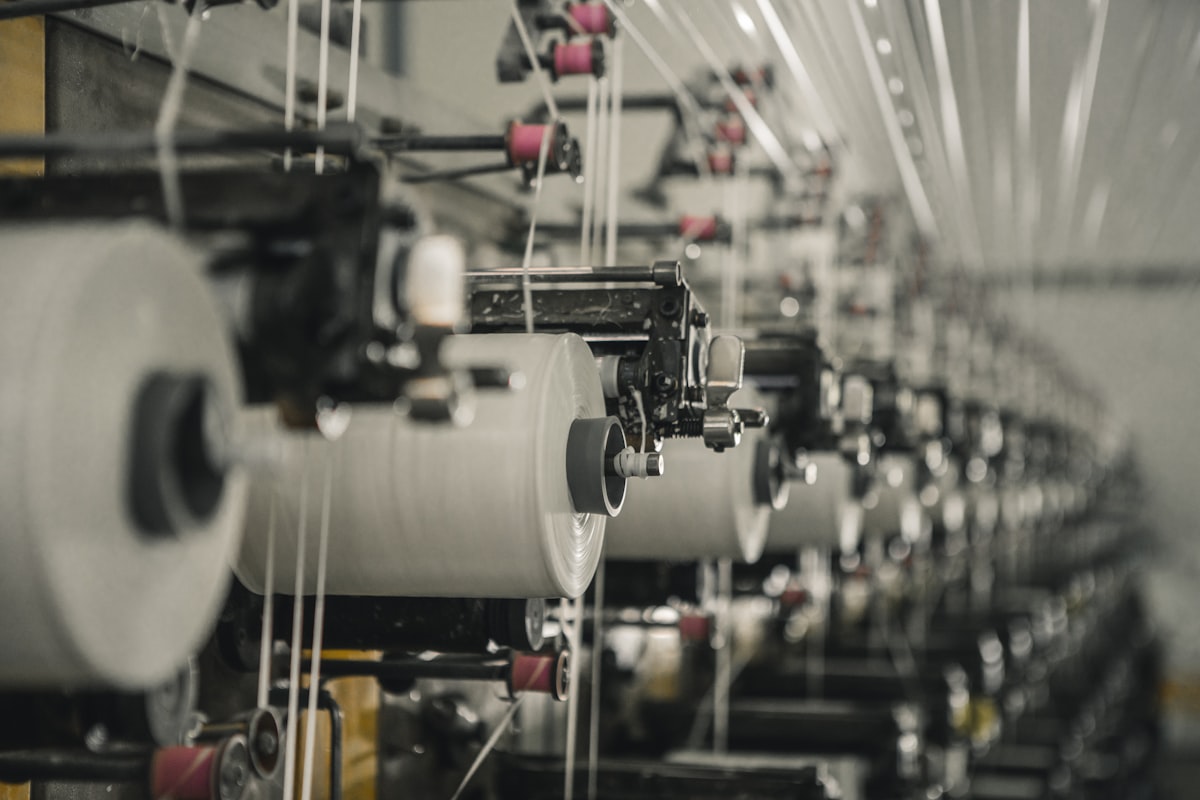
These four tiers are not a menu where you pick one and sacrifice the others. They are a ladder. The same factory floor produces stock items for brands testing their first product and full OEM runs for brands shipping 500,000 units. The same quality standards apply. The same account team manages both.
Brands like SKIMS and FREE PEOPLE run on the same production lines as a founder launching her first 100-piece test order. The system measures commitment, not volume.
Where the opportunity sits
SHEIN’s IPO and its compressed valuation are two sides of the same signal. The market said no to a $100 billion growth story built on tariff arbitrage and marketing spend. It said yes to a manufacturing model that produces garments in the quantity consumers actually want, at the speed they expect, without the inventory baggage the industry has carried for 50 years.
That manufacturing model is not proprietary. It is a philosophy. And it applies with even greater force to categories where quality, certification, and material performance carry more weight than the lowest possible price. Activewear is one of those categories.
Whether you are building your first activewear collection or adding activewear to an existing brand portfolio, the factory you choose determines how fast you can test and how accurately you can iterate. It also sets the ceiling on how far you can scale without switching partners. We have been building that factory since 2013. Across over 90 brands in more than 70 countries, the pattern holds. Brands that start small and iterate fast grow faster than brands that place large orders and hope.
The SHEIN story you read in the headlines is about a valuation cut and a regulatory milestone. The SHEIN story that matters for your brand is about a production model that anyone can use. You do not need their scale. You need a partner that runs on the same logic.
If that sounds like the conversation you have been waiting to have, start here:activewearoem.com.
Post time: Jul-23-2026
