

The 8 Questions That Decide Whether Your Activewear Collection Works
In early August, a four-year gym-goer posted in r/Activewear that she was planning her own activewear brand and asked what women actually wished brands would fix. The thread produced more than 20 concrete complaints: removable pads that shift, sports bras that ignore C+ cups, waistbands that compress the wrong bodies (thread source). None of them are new, and most remain unsolved in 2026.
From our production floor, none of these complaints are hard problems. They are decisions made at the design stage, before a meter of fabric is ordered. That is the uncomfortable part for most brands: the fixes are cheap, and the mistakes are expensive.
This is a development checklist, not a trends roundup. Before you place fabric orders, run these eight checks. Each maps to a live complaint, and each costs less than one failed SKU.
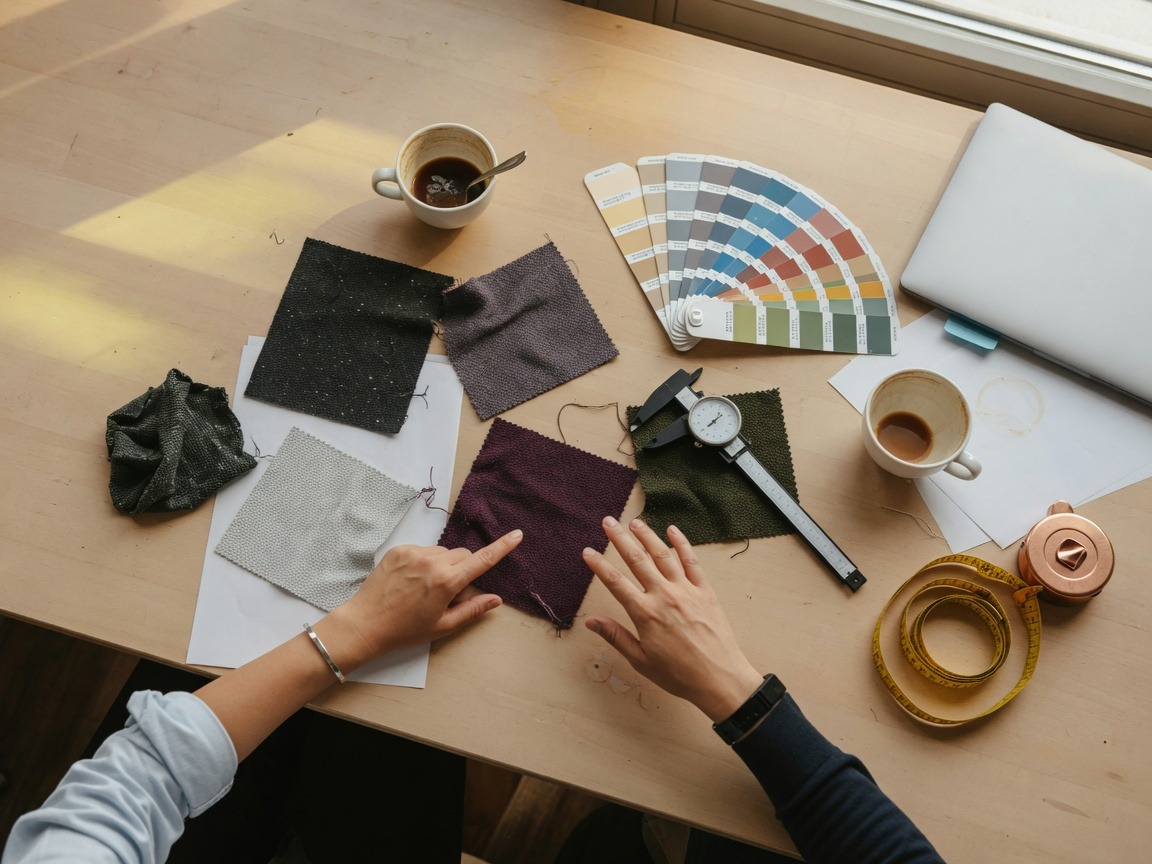
Eight Complaints, Eight Checks
1. Removable pads or sewn-in? The most repeated complaint in the thread. “Why do almost all tops and bras use them?! They suck.” Pads shift in the wash, lose shape, and make white tanks look cheap. What most brands miss is that when a factory proposes removable pads on a design that did not ask for them, the cup construction usually cannot pass QC without them. Ask for sewn-in cup samples from two different production runs.
2. Does your size system serve C+ cups? “Unwearable with a bigger chest, not because of lack of coverage, but because of the inability to adjust the straps.” The community points to Brooks as the standard: band and cup grading, not S/M/L. If your range stops at L, you are designing out a segment that is openly asking to be served. Adjustable, wider straps and a band cut to real ribcage measurements fix most of it (our full-custom development flow).
3. Squat-proof: baseline or selling point? The thread lists squat-proof and camel-toe-proof as baseline expectations. This year, Lululemon’s Get Low leggings went sheer on customers and were pulled from stores (coverage); we broke down the fabric mechanics in a separate analysis (Anatomy of a Quality Collapse). Most brands test opacity dry. The failure is wet, and it appears within two wash cycles once the yarn relaxes. We have seen the same miss across production runs where the test point sat post-dye. Spec both, and test post-wash.
4. High waist or mid-rise? “High waist is NOT the answer.” The comment comes from a customer with a C-section shelf whose waistband stops above the midsection and compresses skin into the wrong place. High-rise has a place, but one rise for everyone is a market default, not a fit strategy. If I were developing a waistband today, I would fit-test three body types before locking the spec: short torso, long torso, and post-partum.
5. Inseam and inclusive sizing. “I’m 4’9″. I do not love having to find options in the kids’ section.” Scaling a pattern from S to XL distorts the rise, the thigh, and the ankle; proper grading redraws proportions at each size break. Ask your manufacturer how grading works across your range. If the answer is “we scale the pattern,” you know what to expect.
6. How long does your fabric stay fresh? Complaints cluster into three failure modes: odor, pilling, shape loss. A review thread names offenders: Alo’s Accolade sets pill, AYBL runs stiff (review thread). Each has a test: ASTM D3512 after 5,000 cycles (Grade 4+ benchmark), ISO 20932-1 recovery (2% or less residual growth), and wear tests at week 4 and week 12. The reason most fabric development stalls is rarely the factory; it is usually an unclear requirement. Bring a target GSM, a composition range, and a hand feel, and development can start. One customer put it directly: “ZIYANG didn’t just produce our designs; they improved our fabric choices.”
7. Basics or trend pieces? “I want basic things that are functional and comfortable.” The comment cuts against five years of matching sets and scrunch seams. Social channels reward novelty; returns punish it. A working split is trend pieces for acquisition, basics for retention. Decide the ratio before development, and hold it. Retention, by contrast, is the underserved side.
8. Beyond neutrals? “Brown and cream is just so boring.” Neutrals dominate because they are safe: fewer returns, less inventory risk. But the palette is saturated. Color costs almost nothing to test (a Pantone reference and a lab dip) and is nearly impossible to copy cheaply at retail. Test two non-neutral options before committing.
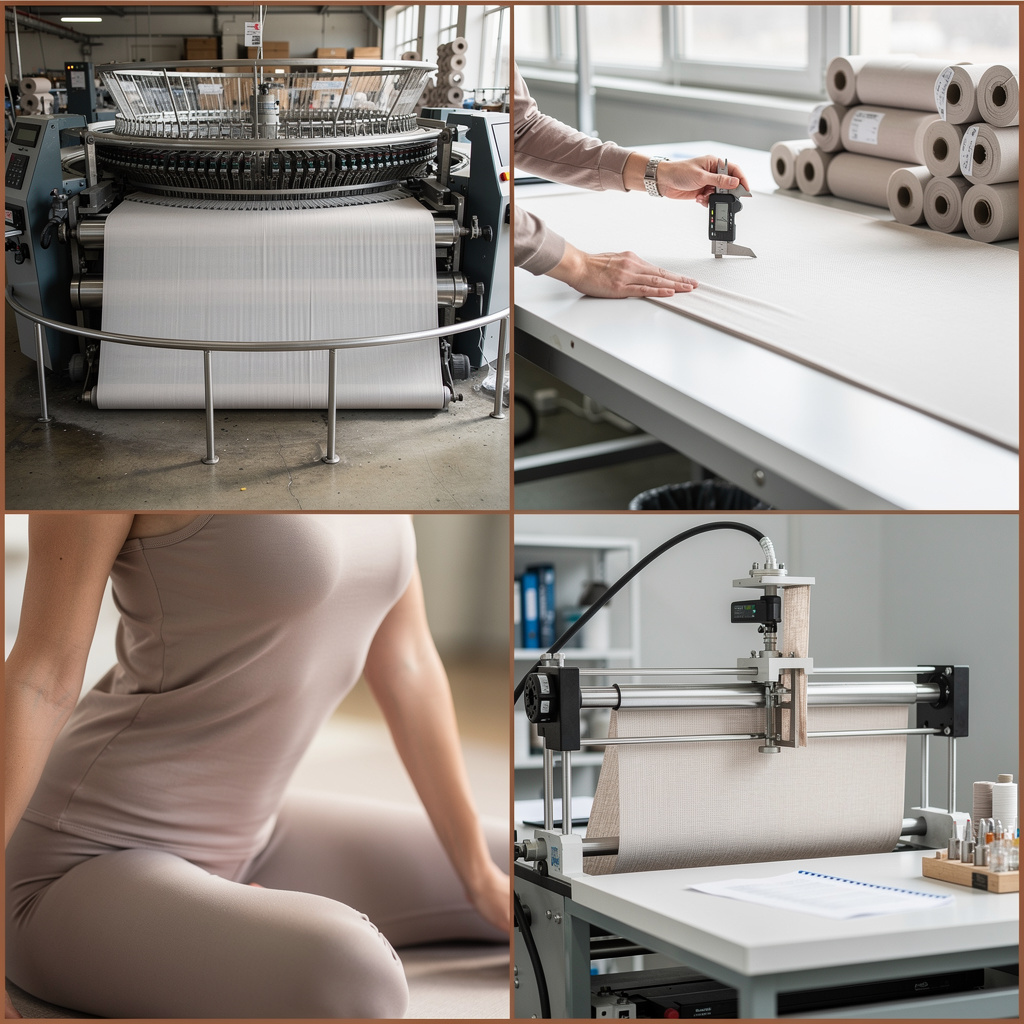
The Three-Step Validation Before Development
These eight checks share a pattern: each moves a conversation from emotion to measurement. Run them through three steps.
Community signal. Record the exact phrasing customers use in your category’s conversations. If I were starting this process, I would spend a week in the threads before touching a spec sheet.
Parameter. Convert each complaint into a measurable spec. “Sheer when wet” becomes an opacity tolerance under stretch. “Pills after a month” becomes an ASTM grade. “Pads shift” becomes a seam construction requirement.
Sample confirmation. Verify specs across multiple production runs, not one hand-fed sample. We have seen brands arrive with a sample that passed every visual check, then discover the bulk fabric varied by nearly 8% GSM. The factory had not measured it because the brand had not asked.
Ask the questions before you place the order. The answers are cheaper than the mistake.
This article was written by ZIYANG, an activewear OEM/ODM manufacturer serving 90+ brands across 70+ countries since 2013. Our development flow (consultation, design, sampling, production, delivery) with AQL 2.5 inspection at three gates is how collections go from complaint to spec. Community quotes from public Reddit threads, August 2026.
Further reading: Anatomy of a Quality Collapse | Seamless vs Cut-Sew: Which Construction Method Fits Your Brand? | Why Fabric Innovation is the Real Secret to Scaling
Post time: Aug-12-2026
