

EUR 50 to EUR 70. One brand proved the gap. Now it’s open again.
EUR 50 to EUR 70. That is the price band where one brand in Spain went from EUR 1 million to EUR 25.5 million in six years. The brand is Born Living Yoga. (Modaes)
This month Born announced two sub-brands — Born Run and Born Court —alongside launches in the US, India, and Mexico.
The price band it proved is now open. Born is vacating it to chase global scale. Whoever moves next owns it.
In this article:
1.1 billion dollars. One brand in the middle. You read that right.
Spain’s women’s yoga clothing market is worth $1.1 billion. Growing at 9.68% a year. Toward $2.5 billion by 2033. (Deep Market Insights) A market that size should have five brands fighting for the premium middle. It has one.
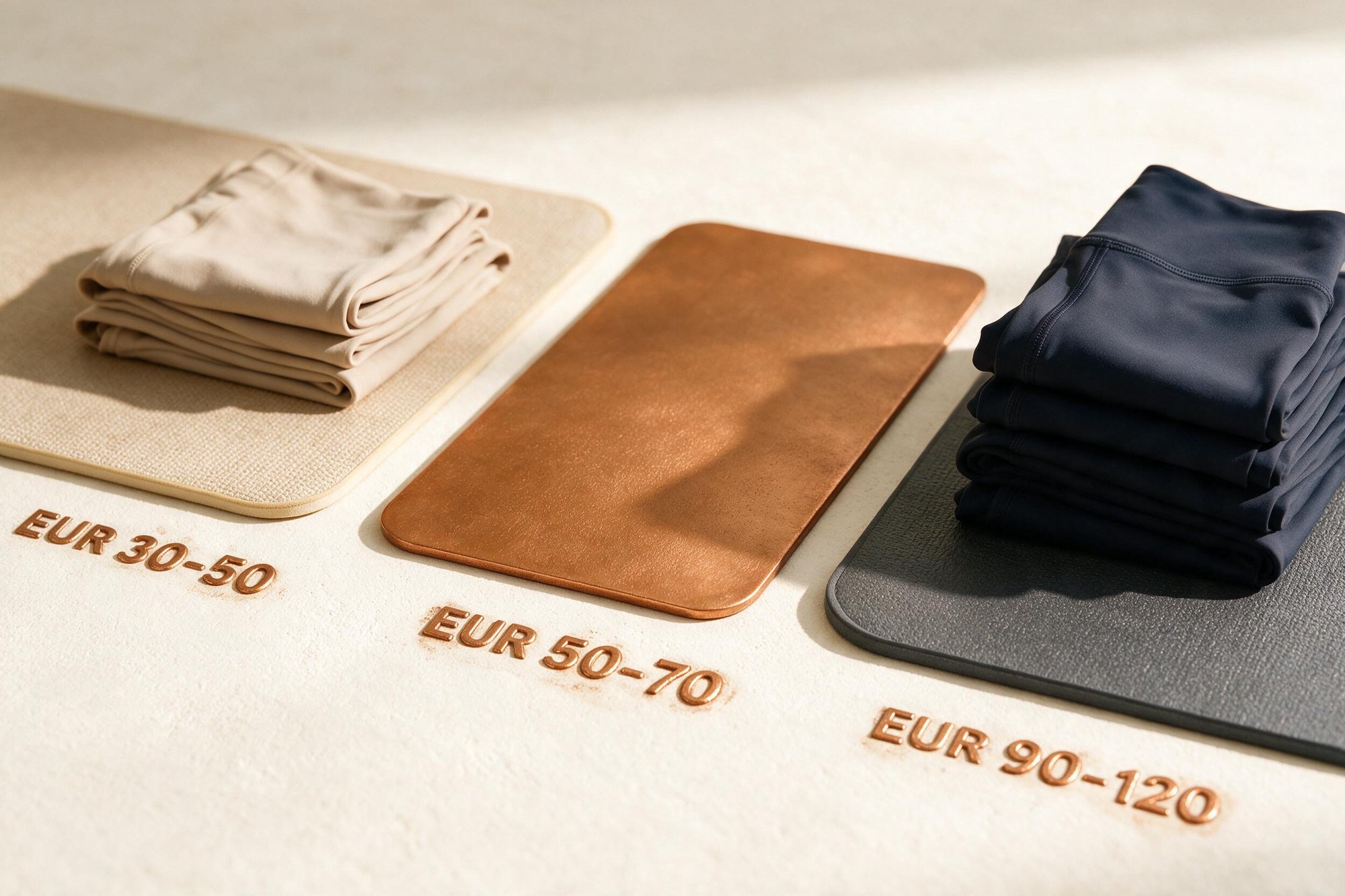
The competitive set splits into three tiers:
| Brand | Price (Spain) | Revenue | What they sell | What they cannot sell |
|---|---|---|---|---|
| Oysho (Inditex) | EUR 30-50 | ~EUR 740M (global) | Speed, scale, 450 stores across 40 markets. Inditex supply chain: 12-day design-to-shelf. | Identity. UAB thesis: “wavers between fashion, basics, and sport.” Reviews: fabric pilling, losing shape, inconsistent sizing. |
| Born Living Yoga | EUR 50-70 | EUR 25.5M (2025) | Yoga-first identity with clear aesthetic. 15-20% above Oysho, 40% below Lululemon. | Scale. Captures ~3% of Spain’s premium yoga segment. Now splitting focus across three sub-brands and two continents. |
| Lululemon | EUR 90-120 | Undisclosed (Spain) | Technical fabric. Community. Global brand equity. A product people tattoo on themselves. | Local accessibility. EUR 90-120 is a different purchasing decision. Global pricing cannot bend for one market. |
Oysho sells speed and availability. But customer reviews tell what the brand won’t: fabric pills after ten washes, leggings lose shape, sizing is inconsistent between cuts. (Thingtesting) A University of Barcelona thesis found the brand wavers between fashion, basics, and sport without a clear identity. (UAB thesis, 2023)
Lululemon competes on performance. Its Spanish pricing is set by global brand architecture. Lululemon cannot drop to 60 euros without breaking its pricing everywhere.
Born saw this. Priced 15-20% above Oysho, 40% below Lululemon. EUR 8.7M in 2021. EUR 14.5M in 2022. EUR 18M in 2023. EUR 25.5M in 2025. (FashionNetwork) Channel mix: 45% retail, 30% wholesale, 25% online. (SGI Europe)
The numbers add up to one fact: Born captured 3% of Spain’s premium yoga segment. Three percent. In a billion-dollar market. The other 97% is consumers buying general activewear for yoga and international brands that shipped a few boxes and declared victory.
How Born built the gap. Phase by phase.
Born’s trajectory is not a mystery. It is a sequence of four decisions. Each one is replicable.
Phase 1. Entry (2017-2019). Pick the price band first. Pick the product second.
Born did not start by asking “what is the best yoga product we can make?” It started by asking “which price band has no owner?” Oysho sat at EUR 30-50. Lululemon at EUR 90-120. EUR 50-70 was empty. Born built its product to fit that price band. Not the other way around.
Most brands entering a new market design product first, then price it. That puts you into a competitive set you did not choose. Pick a price band with no defender and you enter without a fight.
Phase 2. Growth (2020-2022). Wholesale validates what DTC cannot.
Born’s channel mix: 45% retail studios, 30% wholesale, 25% online. (SGI Europe) It put product in El Corte Ingles and Galeries Lafayette. Spanish consumers discover premium activewear in department stores, standing next to other premium categories. A pure DTC launch skips the moment where most of your customers meet you.
Wholesale doors do not open for brand recognition. They open for product substance and compliance paperwork. REACH. GRS. GOTS. A manufacturer that already holds them removes the barrier before you arrive.
Phase 3. Scale (2023-2025). Prove the model. Then split to expand.
Once EUR 25.5M validated the pricing model, Born launched Born Run for running and Born Court for racquet sports. (Modaes) Sub-brands expand the addressable market without diluting the core price position. You do not need sub-brands on day one. You need to know that once your price position holds, expansion goes sideways into adjacent categories, not downward into lower prices.
Phase 4. Now. The gap reopens.
Two new sub-brands. Three new continents. Management attention and inventory allocation now spread across five fronts. The EUR 50-70 price band in Spain, which Born spent six
years proving, sits at 3% penetration. Born validated it. No one has saturated it.
Why the gap is real. And why the clock is running.
Oysho cannot go premium. Inditex rewards repeatable constructions and speed. It does not reward fabric R&D or fit specialization. As long as Oysho’s engine is supply chain, a brand competing on product depth and identity wins without fighting on price.
Lululemon cannot go local. Global pricing is a straitjacket. At EUR 50 to 70 you face neither Oysho nor Lululemon as a direct competitor. You are standing in the one price band that both of them have structural reasons to avoid.
The saturation story is wrong. Reports flagged “potential saturation” in Spain’s athleisure market. (6Wresearch) Meanwhile, Spain’s activewear imports rose in 2024. (Deep Market Insights) Demand for international brands and premium styles grew. Saturation kills brands with no opinion. It does not touch a brand with a defined price position and a reason for being there.
The window will not stay open. Born’s attention is now on running, racquet sports, and three new continents. A price band with one player at 3% does not stay that way.
International DTC brands are watching the same data. Inditex could refresh Oysho with one strategic decision. The brands that lock in EUR 50 to 70 in the next 18 to 24 months set the price floor. Latecomers negotiate against it.
What Spanish consumers will pay 70 euros for
Fabric. Not logo. Consumers paying above Oysho prices pay for what they can feel. Fabric weight. Hand feel. Moisture performance. Seam flatness. The UAB study noted that current brands turn the emotional side of yoga into “aesthetic atmosphere.” Put material quality into a wellness story and you have a lane nobody is defending.
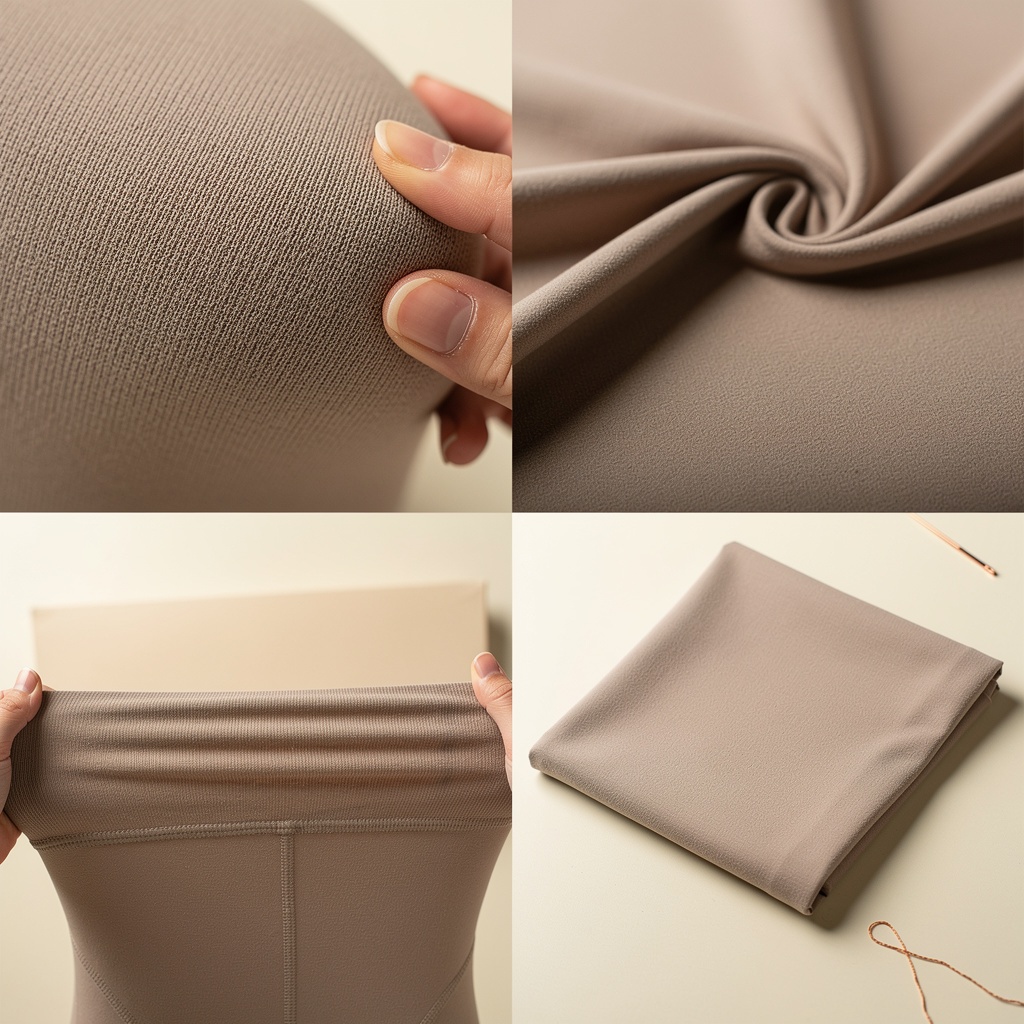
Wholesale matters as much as DTC. Born does 30% of revenue through wholesale. El Corte Ingles actively stocks premium activewear. Spanish consumers discover premium brands in physical stores, standing next to other premium categories. A pure ecommerce launch skips the moment where most of your customers meet you.
The boring part that delays your launch by six months
Spain is the EU. REACH compliance on chemicals. GRS certification for recycled claims. GOTS for organic cotton. Each one is an audit trail.
Enter Spain without a manufacturer that already holds them, and your launch adds 3 to 6 months. Not “could add.” Adds.
The EU’s Digital Product Passport is next. Every textile product will need a traceable record of materials, factory location, and certifications. Brands that build traceability into their supply chain now skate through. Everyone else will be filling out forms instead of filling orders.(EU’s 2026 Compliance Wave)
Your manufacturer’s certifications are your market access. Instagram and brand story matter — but only after the paperwork clears. Compliance opens the door. Product story earns the price. Pick a factory based on regulatory alignment, not the lowest unit price. A manufacturer running 500,000 units a month across 70 countries lives inside these frameworks. That knowledge transfers to you on day one.

Three numbers to know before you enter Spain
The brands that win Spain over the next three years will not have the biggest ad budgets. They will have the clearest numbers.
Number one: your retail price in euros. Does it land between 50 and 70? Below that you are fighting Oysho on its terms. Above 90 you are fighting Lululemon on its terms. In between, you are fighting on product substance, where smaller brands have the edge.
Number two: your manufacturer’s certifications. REACH. GRS. GOTS. Right now. Not “in progress.” Every month of “in progress” is a month your product sits in customs instead of on El Corte Ingles shelves.
Number three: your product story. Is it about fabric substance or about branding? Spanish consumers at EUR 50 to 70 pay for what they can feel. If your story opens with a lifestyle photoshoot instead of a fabric spec, your price will not hold.
Those three numbers are a starting point. The real question is whether they hold against your brand’s specifics. What fabric tier maps to EUR 50-70? Which certifications does your manufacturer already hold? Is your product story built on material substance or brand aesthetics? Answer those three and you know whether Spain is a market to enter or a market to watch.
The brands that lock in the EUR 50-70 price band in the next 18 to 24 months set the price floor for everyone else. Brands that start from the edge and build on product substance get there faster than brands that start with ad budgets. CSB did it from a single underwear SKU — now a category benchmark, still ordering monthly. At activewearoem.com, we talk about market requirements before we talk about unit prices.
Post time: Aug-06-2026
