

What the EU’s 2026 Compliance Wave Actually Means for Small and Growing Activewear Brands
On September 27, 2026, the words “sustainable,” “eco-friendly,” and “conscious” become legally indefensible on your product pages unless you can prove exactly what they mean.
That is not a prediction. It is the enforcement date of the EU’s Empowering Consumers for the Green Transition Directive (EmpCo), and it applies to every brand selling to EU consumers, regardless of where your company is registered. If your activewear brand ships to Germany, the Netherlands, or France, your website copy, hang tags, and Instagram captions are all in scope.
We run an activewear OEM factory in China. We are not compliance lawyers. But over the past six months, a growing number of our clients, mostly independent brand founders and mid-size sourcing managers, have started asking the same question: “What do these new EU rules mean for me, and what do I actually need to do?”
This article is our attempt to answer that question honestly, from the perspective of a factory that sits on the other end of the supply chain.
- What actually changes on September 27, 2026, and why most small brands have not noticed
- If you are a solo founder with a handful of SKUs: your “sustainable” label just became a legal risk
- If you are scaling, 20 to 100 people: the DPP clock is ticking, and it is louder than you think
- A factory’s honest take on why your compliance emails go unanswered
- Where to actually start: a two-speed roadmap

What actually changes on September 27, 2026, and why most small brands have not noticed
The EmpCo Directive introduces a list of automatically unfair commercial practices. Here is what that means in plain terms.
Generic environmental claims are now prohibited. Terms like “eco-friendly,” “sustainable,” “conscious,” “green,” and “climate-neutral” cannot appear in your marketing unless they are backed by a recognized certification scheme or verifiable evidence of excellent environmental performance. An internal sustainability policy does not count. A supplier promising you the fabric is recycled, without a GRS certificate to prove it, does not count.
Offset-based neutrality claims are banned. You cannot call a product “carbon-neutral” based on buying carbon credits. Offsetting can still be mentioned as a practice, but it cannot be used to claim neutrality.
Private sustainability labels need independent verification. If you created your own badge or seal without third-party certification from an accredited body, that label is now illegal.
Aspirational future claims need a concrete plan. Saying “we will be fully circular by 2030″ is only acceptable if you have a documented, measurable, publicly accessible roadmap that has already started. A vague ambition is not a compliant claim.
The penalties vary by member state, but the ceiling is up to 4% of annual turnover in the countries concerned. All member states share the same September 27, 2026 enforcement date—there is no staggered rollout. Shein was fined EUR 1 million in Italy for misleading circularity claims, and that was before EmpCo was enforceable.
Yet most small activewear brands we talk to have never heard of EmpCo. They are busy shipping orders, shooting content, and keeping their manufacturers on schedule. The regulation feels like distant noise. It should not.
Beyond EmpCo, there is a second wave coming. The EU’s Ecodesign for Sustainable Products Regulation (ESPR) introduces the Digital Product Passport (DPP), a structured digital record that every garment sold in the EU will eventually need to carry, accessible via a QR code on the label or packaging. The textile delegated act defining exact data fields is expected around 2027, with mandatory compliance eighteen months later, roughly 2028 to 2029. The central DPP registry goes live this month, July 2026, as mandated by ESPR Article 13. And the ban on destroying unsold apparel, accessories, and footwear takes effect on July 19, 2026, for large companies, this week.
For the 20-to-100-person activewear brand scaling across Europe, the clock is already ticking. The preparation window, mapping suppliers, collecting product data, building the digital backbone, is estimated at 12 to 24 months. Waiting until the delegated act drops means scrambling.
For the solo founder with three SKUs and a Shopify store, the immediate concern is simpler: what you are allowed to say about your products changes in ten weeks.
If you are a solo founder with a handful of SKUs: your “sustainable” label just became a legal risk
Picture this. You started your brand two years ago. You make yoga leggings and bras from what your factory told you is recycled nylon. Your website says “sustainable activewear made with eco-friendly materials.” Your Instagram bio says “conscious movement wear.” You are not trying to mislead anyone. You genuinely chose better materials than the industry average.
Under EmpCo, every one of those claims is now a potential liability.
The problem is not that you are dishonest. The problem is that “sustainable” does not have a single verifiable meaning that a consumer, or a regulator, can check. Does it mean the fabric is recycled? The packaging is biodegradable? The factory runs on solar? Without specificity and evidence, the word means nothing. And as of September 27, words that mean nothing are legally prohibited.
Here is a compliant rewrite: instead of “sustainable activewear,” write “these leggings are made from 75% GRS-certified recycled nylon. The elastic trim is not yet recycled, we are working with our supplier to replace it by Q1 2027.” The structure is straightforward: name the specific claim, explain the evidence, acknowledge the limitations.
This might sound like a small wording change. For a brand whose entire positioning is built around sustainability, it is existential. Strip out “eco-friendly” and “conscious” from your copy, and what is left of your story?
The answer, we think, is a better story. One backed by actual certificates, specific percentages, and supplier documentation. A story that does not rely on adjectives.
The second pressure point for small brands is platforms. Zalando and Amazon are not waiting for 2027. Zalando already requires partners to submit Extended Producer Responsibility (EPR) registration numbers for packaging across twelve EU countries. Amazon enforces the General Product Safety Regulation (GPSR), which mandates an EU-based Responsible Economic Operator for non-EU sellers, with fines reaching 4% of EU turnover. If your listing gets suspended, your revenue stops. The platform does not care that you are a small brand.
The third pressure point is harder to quantify but equally real: you do not know what you do not know. A 2025 UNIDO readiness assessment across textile-exporting countries found that policy awareness of DPP legislation among suppliers was low across the board—many companies were unaware or unclear about their obligations under the ESPR, limiting early investment and preparation. A separate industry survey of 60 suppliers across China, Vietnam, India, Pakistan, Bangladesh, and Morocco found that only four demonstrated a clear understanding of the data obligations tied to EU market access. These are the countries that manufacture most of the world’s activewear. When a brand founder emails their factory asking for carbon footprint data or chemical substance disclosures, the factory often has no idea what those words mean in a regulatory context. The email goes unanswered not out of unwillingness, but because the question does not compute.
So what should a small brand actually do right now? Three things.
First, audit every green claim on your website, product pages, packaging, and social media. Run a search for “sustainable,” “eco-friendly,” “green,” “conscious,” “climate-neutral,” and “ethical.” For each one, ask: can I point to a specific certificate, a specific percentage, or a specific verifiable fact that proves this? If the answer is no, rewrite it before September.
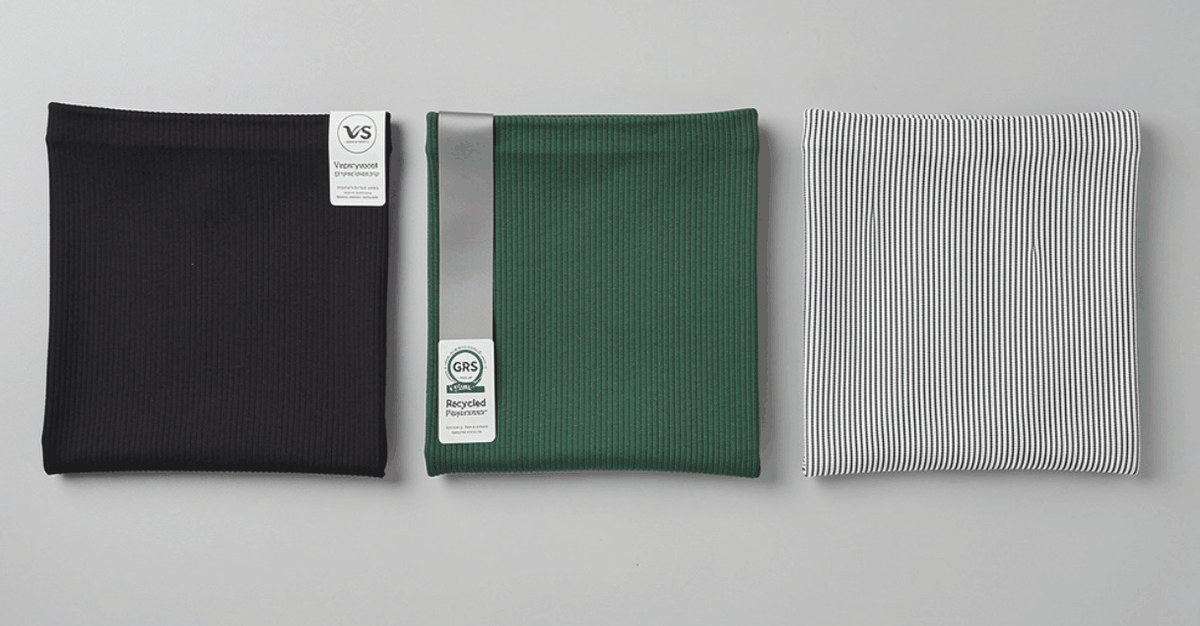
Second, get your fabric certifications in order. If your factory told you a fabric is recycled, ask for the GRS (Global Recycled Standard) certificate. If they told you it is organic cotton, ask for the GOTS (Global Organic Textile Standard) certificate. If they told you it is tested for harmful substances, ask for the OEKO-TEX Standard 100 certificate. A verbal assurance from a supplier is not documentation. If your factory cannot produce these certificates, you need to either switch fabrics or stop making the claim.
Third, ask your factory for a written material composition breakdown, in English, for every product you sell. Even a one-page document listing fiber percentages, country of origin for the fabric, and any certifications attached to the materials. This is the smallest unit of supply chain data, and it is the foundation everything else will build on. If your factory cannot or will not provide this, that is a signal worth paying attention to.
If you are scaling, 20 to 100 people: the DPP clock is ticking, and it is louder than you think
For the growing activewear brand with a design team, a production manager, and three to eight suppliers across China, Vietnam, or Bangladesh, the compliance picture looks different. EmpCo is the immediate concern, but the DPP is the structural one.
Let us talk about what DPP compliance actually costs. Based on the Kōbō Sustainable Fashion Technology Index (2025) and compliance platforms, the annual technology stack for a mid-market brand breaks down roughly as follows: DPP platform licensing, $30,000 to $100,000; lifecycle assessment tools aligned with EU Product Environmental Footprint methodology, $30,000 to $100,000; and supply chain visibility and traceability software, $50,000 to $200,000. That adds up to $110,000 to $400,000 per year. For a brand doing $3 million in revenue, the lower end of that range represents nearly four percent of top-line revenue, before you have hired a single compliance person.
These numbers are enterprise-tier figures, and they reflect the current reality that no vendor has yet built a unified, mid-market-priced platform that bundles LCA, DPP, and supply chain traceability into one tool. The gap exists. It will close. But brands waiting for an affordable all-in-one solution to appear before they start preparing are betting their EU market access on a product that does not exist yet.
There is a cheaper path. It involves starting with a spreadsheet instead of a platform, and piloting on three to five products instead of your entire catalog.
The cost question is real, but the bigger bottleneck is supplier data. A recent industry assessment found that only 29 percent of fashion firms can currently supply fiber-level data for their products. In an informal survey of 60 suppliers across Asian manufacturing hubs, only four demonstrated a clear understanding of the data obligations tied to EU market access. Four out of sixty.
The suppliers are not refusing to cooperate. The Repass team, who build DPP infrastructure for fashion brands, put it well: what looks like supplier resistance is usually a capacity problem. A mid-size factory in Bangladesh or China operates on thin margins, runs on spreadsheets and manual production logs, and has never been asked for the data points a DPP requires. When you send a twenty-page English questionnaire asking for tier-2 material provenance, chemical substance disclosures, and carbon footprint breakdowns, the factory manager does not think “I will resist this request.” They think “I do not understand this request,” and they move on to the next email from a customer who is asking about delivery dates.
This is not a problem you can solve with a stricter email. It is a problem you solve by changing how you ask.
The third pain point for mid-size brands is organizational. DPP compliance touches design, sourcing, quality, compliance, IT, and marketing. In a twenty-person company, those functions might be three people wearing multiple hats. No one has “DPP owner” in their job description. When every department assumes someone else is responsible, nothing moves.
Here is where a growing brand should start. Pick three to five SKUs where you already have the strongest supplier relationships and the most complete documentation. Map the supply chain for those products down to tier 2: who made the fabric, what mill, in which country. Collect every certificate, test report, and material specification you already have for those products and put them in one folder. Then identify the gaps. What data points are you missing that a DPP would require? Which supplier holds that data? That gap list becomes your six-month roadmap.
Start with tier 1 and tier 2. Tier 1 is your garment factory. Tier 2 is your fabric mill. These two tiers hold the majority of the data a DPP requires in its first phase. Tier 3, yarn spinners, and tier 4, raw material sources, can wait. The JRC methodology published in March 2026 confirms that early DPP requirements will focus on what is feasible and proportionate. Do not let the perfect become the enemy of the started.
A year from now, brands that began supplier mapping in 2026 will be running pilot DPPs while their competitors are still reading the delegated act for the first time. That lead compounds.
A factory’s honest take on why your compliance emails go unanswered

We want to offer a short view from the other side of the inbox.
When a brand sends their factory a compliance questionnaire, here is what typically happens. The email arrives in English, often as a PDF attachment. The factory manager, whose working language is Mandarin, Vietnamese, or Bengali, opens it in a translation tool. The questions reference regulatory frameworks they have never heard of. The terminology, “lifecycle assessment,” “product environmental footprint,” “substances of concern,” does not map to anything in their daily work. They close the document and reply to a customer who is asking about shipment dates instead.
This is not a story about bad factories. It is a story about a communication gap that the regulation did not anticipate. The DPP assumes a digital supply chain. Most of the global apparel supply chain still runs on production whiteboards, WeChat messages, and handwritten QC logs. The data exists, scattered across ledgers, inspection reports, and certificate files. It is not structured, it is not in English, and it is not waiting for an API call.
The brands that get the data are the ones who change how they ask. Send a short message in the factory’s language first, explaining what you need and why, before attaching a formal document. Ask for one specific thing at a time, a certificate, a fiber composition breakdown, a mill name, rather than sending a twenty-page survey. Provide a template. Do not assume the factory knows what an LCA is. If you can point to a concrete example of what good looks like, your chance of getting a useful response rises dramatically.
Most factory managers want to help. They want to keep your business. They just need to understand what you are asking for.
Where to actually start: a two-speed roadmap
The compliance journey for a three-person brand and a thirty-person brand do not look the same. Here is a parallel roadmap.
| Timeline | Small brand (under 10 people) | Growing brand (20 to 100 people) |
|---|---|---|
| This month | Audit every green claim on your site, product pages, and social media. Remove or rewrite anything unsubstantiated. | Form a cross-functional DPP working group. Three people from design, sourcing, and operations is enough. Give it a name and a monthly cadence. |
| This quarter | Collect GRS, GOTS, or OEKO-TEX certificates for every fabric you use. Ask your factory for a written material composition breakdown in English. | Select three to five pilot SKUs. Map their supply chain to tier 2. Gather every existing certificate, test report, and material spec into one structured folder. |
| By end of 2026 | Replace every generic sustainability claim with a specific, scoped, evidence-backed statement. | Complete a gap analysis against the JRC DPP methodology. Identify which data points you are missing and which supplier holds each one. |
| 2027 | Monitor the DPP delegated act. When it drops, read what applies to your product categories. | Evaluate DPP platforms. Run a complete DPP data flow on your pilot SKUs. Add data delivery obligations to supplier contracts. |
This is not a compliance checklist you complete and forget. It is an infrastructure you build once and maintain. The brands that start now will do it at their own pace. The brands that wait until the delegated act lands will do it under a deadline, which is the most expensive way to do anything.
EU compliance is not a one-time project. It is a permanent layer of how your supply chain operates. The brands that treat it that way now will have fewer surprises later.
At Ziyang, we have been on the factory floor since 2013. We hold six certifications across our production lines, including GRS, GOTS, OEKO-TEX Standard 100, BSCI, SA8000, and ISO9001-F. When a client asks us for a GRS certificate for their recycled nylon yoga bra, we send the PDF. When they ask whether we can provide batch-level material composition data for their DPP pilot, we can pull the records, because our QC system tracks material inputs from yarn inspection through final packaging. Not because we are more sophisticated than other factories. Because we understood early that the brands who survive this regulatory shift are the ones whose manufacturers can produce documentation as reliably as they produce garments.
Take SET ACTIVE as an example. When they launched their Eco-Luxe collection, they did not just put a “sustainable” label on a legging. They worked with us to source GRS-certified recycled fabrics, verified every material claim against the certificate chain, and tested the final product against OEKO-TEX Standard 100. The result was a collection that sold out in three days. Not because of clever marketing copy. Because every green claim on the product page pointed to a document that existed. That is what the post-September-27 market rewards—and what it will increasingly punish the absence of.
If you are trying to figure out where to start with EU compliance, and you want to talk to a factory that takes this as seriously as you do, we are here.
Post time: Jul-15-2026
