

A Manufacturer Stock Program is a strategic investment, not a random buffer. The capital and space committed must be focused on the products that drive the most predictable revenue. This requires classifying your SKUs to identify your high-volume, low-volatility winners.
Focusing on Your Core Inventory (A-Items)
To ensure the stock program is maximally effective, you must concentrate on your "A-Items." These are the core 20% of your products that generate the vast majority of your annual revenue. Think about the styles that are immune to passing trends: your standard black leggings, core sports bras, and navy or gray basic tees. These products exhibit high sales volume and low demand volatility, making them the mandatory candidates for your manufacturer’s stock program. By pre-producing your A-Items, you safeguard your revenue stream during the most volatile periods.
Conversely, it is essential to know what to exclude. C-Items, which are characterized by low annual usage and high demand volatility (like new seasonal prints or ultra-fashion pieces), should be handled through standard, planned production cycles. While B-Items (moderate value and volume) might be considered for fabric pre-production, focusing the final finished inventory exclusively on A-Items ensures maximum security and minimum risk of holding dead stock.
Beyond sales data, the styles you choose for a stock program must have a stable fit, fabric, and color specification. Avoid products that are frequently updated, as excess stocked inventory can quickly become dead inventory if the design is changed. A reliable candidate for stocking is any item that has not seen a material specification change in at least 12 months
The Due Diligence: 3 Critical Questions for Your Manufacturer
Before signing a Stock Program agreement, your B2B purchasing team needs absolute clarity on three specific logistical points to safeguard your investment and brand compliance:
1. The Traditional Problem: A Thirsty Industry
The primary value of the stock program is speed. The manufacturer must clearly define how quickly they can execute the final stages—such as logo application, neck label insertion, and custom packaging—on the pre-made stock. A true partner should be able to offer final customization and shipment in 2 to 4 weeks, far outpacing the 10-14 weeks required for a full production run. This rapid turnaround is the competitive edge you are paying for
2. "What is the Minimum Order Quantity (MOQ) on the Customization phase?"
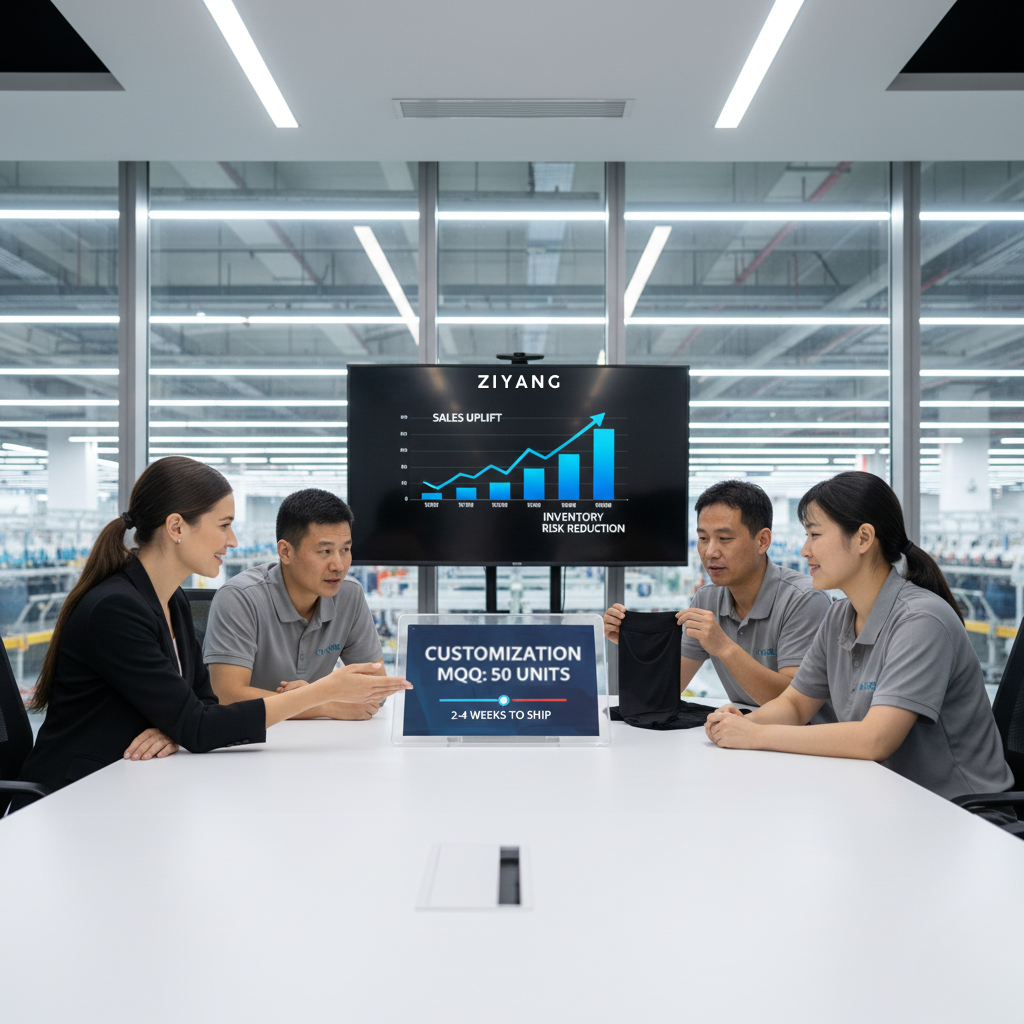
Since the bulk production is already complete, the MOQ for the final branding should be dramatically lower than the original production MOQ. A flexible B2B manufacturer will offer customization MOQs that enable you to order small, precise weekly or bi-weekly replenishments of specific colors and sizes. This just-in-time approach helps preserve your cash flow and allows you to avoid overstocking fringe sizes that may not sell until the following season
3. "What is the quality assurance (QA) protocol for the pre-produced goods?"
While the product may have been sitting in the manufacturer's warehouse, you need assurance that it maintains quality and compliance before it ships. The agreement should explicitly stipulate that the goods will undergo a final, client-specific AQL (Acceptable Quality Limit) inspection after the customization stage and immediately prior to shipment. This final quality gate is crucial for guaranteeing that the inventory your brand receives meets your stringent standards and compliance requirements
4 Mitigation Strategy: Shared Forecasting & Commitment Windows.
A strong manufacturer partnership requires a mutual understanding of risk. We work with clients to establish rolling commitment windows—a contractually agreed-upon minimum quantity purchase over a 6-12 month period. This commitment is based on historical sales data and your forecast. If your sales dip, our agreement allows for a structured drawdown of stock, protecting us from sudden obsolescence while still guaranteeing your supply when demand recovers. The key is never to overstock based on aggressive hope, but on conservative, data-driven averages
5 Mitigation Strategy: FIFO and Environmental Controls.
We ensure all stock program inventory is managed on a First-In, First-Out (FIFO) basis. This guarantees that the oldest stock is branded and shipped first, constantly cycling the inventory. Furthermore, our dedicated stock warehouses employ climate and humidity control to protect the integrity of specialized performance fabrics, ensuring the quality you inspect during sampling is the quality your customers receive a year later
The Strategic Advantage: Protecting Your Cash Flow and Agility
Ultimately, a well-managed Stock Program shifts the risk profile of your inventory investment. Instead of tying up capital in a massive order 120 days out, you only commit capital for the final branding and shipping once demand is confirmed.
This means faster inventory turnover, shorter periods where cash is tied up in goods, and a significant reduction in the risk of dead inventory. This financial agility frees up capital for other high-value investments—like marketing, R&D, or expanding your C-Item product lines—while your manufacturer handles the heavy lifting of inventory security.
By choosing the right partner and the right core styles, the peak season crisis becomes your brand's biggest opportunity for stable growth.
Ready to build a forecast-proof supply chain?
We offer customized Stock Programs tailored to your A-Item inventory profile. Let us know your top 5 core styles, and we can draft a 12-month fulfillment strategy to eliminate your peak season stockout risk.
Post time: Dec-06-2025
